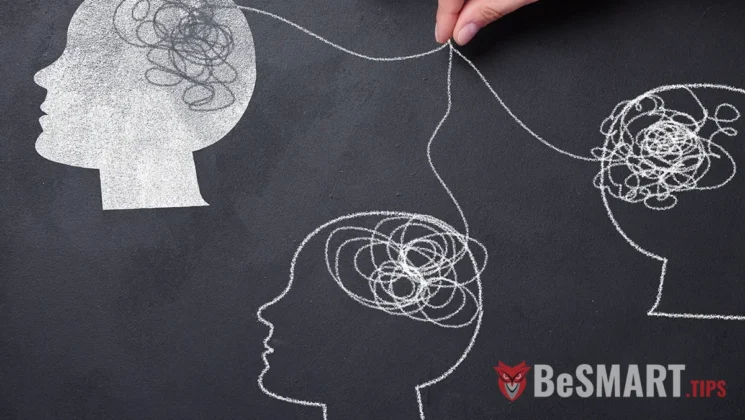
For a long time I have not witnessed such a form of collective seduction in Romanian politics. At least, since the period of the 1989 Revolution, when we were seeing "terrorists" everywhere, and until 2024, such an effective method of manipulation of the masses. The campaign around him Calin Georgescu it was not a classical one, it was not based on programs, ideas or rational confrontations (not even on electoral confrontations). It was one show of emotion, al sacred symbols, al distilled national identity in words that bypass logic and go straight into the depth of the collective subconscious. An operation of electoral psychomarketing of an efficiency rarely found in the European democratic space.
The presidential campaign of Călin Georgescu from Romania represented a textbook example ofemotional manipulationand alarchetypal branding, an approach that went far beyond classic election campaign strategies. Through symbol-laden language, emotional repetition and exploitation of the collective subconscious, this campaign mobilized the masses, bypassing logic and reasoning.
So what happened, why exactly did we get to this point?
Table of Contents
Călin Georgescu, a leader built not by ideas, but by sensations
Călin Georgescu did not gain attention through facts or solutions, but through it carefully constructed mythic projection.
Călin Georgescu was not promoted as an ordinary politician, but as a carefully constructed mythical projection, a symbol of a "higher mission". Through his language, but also through that of his digital supporters, it conveyed not a political program, but a call - an almost religious one. His campaign used techniques of psychomarketing and archetypal branding to create a deep emotional resonance, deliberately avoiding rational debates (and electoral debates) or concrete solutions.
Terms such as "Inner Light", "Nation Spirit", "Sacred Roots", "Deep Land", "Purification", are not accidental. They are symbolically charged expressions that act on the subconscious, awakening the feeling of a personal mission, a "higher" collective goal. You don't give answers, you trigger emotions. You don't promise solutions, you offer salvation.
Manipulation methods: an assault on the subconscious
That campaign used terms that would activate the subconscious and trigger deep emotions. The messages sent in cascade on social networks and a Romanian television, strengthened the conviction of many that this candidate is the solution to their problems.
Here's how the manipulation campaign worked, broadly speaking:
Archetypal language: Terms with a spiritual and identity charge were used, such as "divine", "soul of the nation", "sacred roots", "purity", "ancestors", "return to origins" and "regeneration". These terms evoke universal archetypes—the hero, the savior, the tribal unit—that activate deep emotions and bypass the critical filter of the mind.
Astroturfing digital: Platforms like TikTok have been used to create the illusion of a spontaneous popular movement. Clips with nature images, epic music and seemingly authentic messages were, in reality, sponsored, discreetly marked with "Ad". An enormous number of netizens did not know that those accounts do not belong to real people, but are a disguised promotion practice. These materials delivered repetitive subliminal messages, amplifying the emotional impact.
Emotional repetition: Messages were designed to be consumed quickly and repetitively, taking advantage of the passive nature of content consumption on social media. The constant repetition of certain phrases fixed the ideas in the subconscious, making them seem like personal beliefs of the voters.
Avoiding logic: The campaign ignored fact-based debate, focusing on emotion and symbols. Any criticism or disclosure of Georgescu's contradictions was rejected as "propaganda of the system", strengthening the loyalty of the followers.
Key Phrases for Subconscious Manipulation
I don't necessarily suspect Călin Georgescu of intelligence, but we have to admit that he is very good at manipulation. Especially by repeating some key phrases that act directly on the subconscious.
Here is a breakdown of key phrases and their effect on the subconscious:
Spiritual/mystical phrases
"Listen to your inner call"
"You are the light and he is the beacon"
"Feel the spirit of the nation in you"
"The inner light will guide you"
"The divine essence of the Romanian people"
Effect: Creates a deep emotional connection, suggesting a sacred mission. People who refuse analytical and rational thinking for a long time, quickly fall into the trap of mysticism and spiritual messages.
Identity phrases
"Our roots are sacred"
"The ancestors are calling us"
"The Romanian nation is reborn"
"The Deep Country Awaits Rescue"
"Your legacy is our destiny"
Effect: Stimulates the feeling of belonging to a collective destiny, anchored in history. The maximum efficiency is achieved when the person considers himself a "patriot", but does not know the history and does not know how to see behind the words.
Purification/reconnection phrases
"Return to Purity"
"The living earth calls you"
"Regeneration starts with you"
"The simple life is the way"
"Clean food, clean soul"
Effect: I awaken the desire for authenticity and safety by reconnecting with nature.
Trance Phrases
"You don't have to understand, just feel"
"In you there is already the answer"
"Everything begins with a silent call"
"You know the truth, even if you've forgotten"
"Your heart knows the way"
Effect: I bypass critical thinking, inducing a state of passive receptivity.
Călin Georgescu also used in his speeches phrases and ideas taken almost word for word from movies, series and cartoons, without mentioning the sources. These expressions, often with an emotional or mystical charge, were integrated into his messages to amplify the impact on the audience.
Examples of phrases taken by Călin Georgescu from cinematographic sources
"The Lord of the Rings":
Georgescu's phrase: "The world has changed. It is no longer what it was. You can feel it in the trembling of the water, in the stirring of the forest, in the breeze of the wind, in the vibration of the earth."
The original source: Regina Galadriel (interpretată de Cate Blanchett) spune în film: “The world is changed. I feel it in the water. I feel it in the earth. I smell it in the air.”
Context: This phrase, used in the opening of the trilogy, evokes a profound and inevitable change in the world, being adapted by Georgescu to create an emotional connection with his audience.
Georgescu's phrase: "I see, feel and hear your heavy tears. Weep, my dears, but do not despair. Not all tears are bad."
The original source: Gandalf (interpretat de Ian McKellen) spune în film: “Here at last, dear friends, on the shores of the Sea comes the end of our fellowship. I will not say: do not weep; for not all tears are an evil.”
Context: This line, uttered in an emotional parting moment, was used by Georgescu in a post-election message to console and mobilize supporters.
“Frozen II” (animate ceremony)
Georgescu's phrase: "Water has a memory, and through pollution we destroy its soul."
The original source: The character Olaf says in "Frozen II": "Water has memory."
Context: Georgescu used this pseudoscientific idea, popularized in the film, to give speeches about "living water" and the spirituality of nature, adding a mystical layer to his messages.
Călin Georgescu also used other related phrases: "Water from the Carpathians is a cosmic gift" and "Water is the blood of the earth, and Romania is its heart." These expressions, while not direct quotes, seem inspired by the film's mystical tone, which explores the connection between nature and spirituality.
“Ultimul Samurai” (The Last Samurai)
Georgescu's phrase: "Romania was created by a handful of brave warriors and worthy people who gave their lives for a word that today seems forgotten: honor."
The original source: Vocea naratorului din film spune: “They say Japan was made by a sword. They say the old gods dipped a coral blade into the ocean, and when they pulled it out, four perfect drops fell back into the sea, and those drops became the islands of Japan. I say Japan was made by a handful of brave men, warriors willing to give their lives for what seems to have become a forgotten word: honor.”
Context: Georgescu adapted this introduction, replacing the Japanese mythology with references to Zamolxe and Geto-Dacians, to construct a mythic narrative about the origin of Romania.
“The Newsroom”
Georgescu's phrase: "America is 7th in literacy, 27th in math, 22nd in science, 49th in life expectancy, 174th in infant mortality, but 1st in incarcerated citizens per capita and 1st in military budget."
The original source: Personajul Will McAvoy (interpretat de Jeff Daniels) spune: “There is no evidence to support the statement that we’re the greatest country in the world. We’re 7th in literacy, 27th in math, 22nd in science, 49th in life expectancy, 178th in infant mortality, 3rd in median household income, number 4 in labor force, and number 4 in exports. We lead the world in only three categories: number of incarcerated citizens per capita, number of adults who believe angels are real, and defense spending.”
Background: Georgescu took this list of statistics almost entirely, without verifying the actuality of the data, in order to criticize the global position of the USA, presenting it as his own observation. Of course, the data is erroneous, but Georgescu's target audience does not have analytical thinking and "takes for granted" everything they receive.
These phrases, taken from cinematic sources, were integrated into Georgescu's speeches to amplify the emotional impact and create an aura of depth and authenticity. They were particularly effective on platforms like TikTok, where the solemn tone and symbolic imagery resonated with audiences vulnerable to such messages.
Profile of vulnerable people
And yet, who are the people vulnerable to this kind of manipulation?
These psychomarketing techniques are particularly effective on certain categories of people, who are more susceptible to emotional and symbolic messages:
People with limited education: Those with little access to formal education tend to be less exposed to critical thinking and more receptive to simple emotional messages.
Emotionally sensitive individuals: People who prioritize emotions in their decision-making are more easily swayed by archetypal language and promises of meaning or belonging.
Those disappointed by the system: People frustrated by institutions, corruption or social inequalities are prone to look for "saviors" who promise a radical change.
Young people exposed to social networks: Young people who spend a lot of time on platforms like TikTok are vulnerable due to the passive consumption of content and the flexibility of their subconscious.
People with limited general culture: Those without a solid foundation of historical or political knowledge may be more easily swayed by mythic narratives that seem to offer simple answers to complex problems.
Those in search of meaning: Individuals experiencing a lack of personal or collective purpose are drawn to messages that promise a "higher mission" or a reconnection with "roots."
The purpose of hybrid warfare
There are indications that the ouster of Călin Georgescu could be part of a larger strategy of hybrid warfare, orchestrated to destabilize the European Union. Hybrid warfare combines military and non-military tactics, including information manipulation, to undermine trust in democratic institutions and polarize societies. In the current context, Russia is known for using such tactics to weaken EU cohesion, and Georgescu's campaign, with its anti-establishment and anti-Western messages, fits this pattern.
By promoting a charismatic leader who exploits social and identity grievances, external forces can amplify internal divisions, weakening confidence in democratic values and in Romania's EU and NATO membership. Digital astroturfing, discreet campaign financing on social media, and narratives glorifying "independence" from the "globalist system" are typical hybrid warfare tactics used to create chaos and polarization.
Why does the truth no longer matter?
In the face of this storm of emotion, facts became irrelevant. Any attempt at logical dismantling - from Georgescu's controversial statements to the association with radical ideologies - was either ignored or rejected as "manipulation of the system".
Psychologically speaking, once an idea has penetrated the subconscious, it can no longer be removed by logic. The subconscious mind responds to emotion, repetition, symbols. This explains the extremely polarized reactions on social media: either aggressive anger or mystical enthusiasm. No sign of calm debate.
Methods to combat manipulation in the online environment
Perhaps the most dangerous aspect of this phenomenon is that it is not unique. It is replicable. When such a technique works, it will be reused. In the face of such a force, the conscious alone is not enough. We must learn to protect not only our mind, but also our subconscious. And then the question arises: what can we do?
To counter this phenomenon, it is essential to act both at the individual and societal level, with strategies that target the subconscious and promote critical thinking:
Media and digital education: People need to understand how social media platforms and their algorithms work. Citizens must be educated to recognize sponsored advertising, identify astroturfing and understand the mechanisms of emotional manipulation. School curricula and public campaigns should include modules on how social networks work.
Increasing alertness to language: When a discourse is based only on mystical, identity and sacred words, without concrete solutions, it should be viewed with suspicion.
Positive emotional language: To counter archetypal branding, counter messages must be equally emotional and symbolic, but anchored in democratic values. For example, phrases like "together we build a united future" can appeal to the same needs for belonging and hope.
Counterbalanced content, not the opposite: You can't fight an emotion with a cold argument. But you can build another emotion – genuine, grounded in reality and respect.
Promoting critical thinking: Investments in long-term education that develop analytical skills and healthy skepticism are crucial. Citizens should be encouraged to ask questions and check sources.
Regulation of social platforms: TikTok and other networks must implement strict policies to clearly label sponsored content and limit the spread of misinformation. Authorities should work with platforms to identify and counter astroturfing campaigns.
Creating solidarity communities: Building groups and initiatives that promote solidarity, inclusion and democratic values can provide an alternative to divisive narratives. These communities can counter the sense of alienation exploited by manipulative campaigns.
Monitoring hybrid warfare: State institutions and civil society must be alert to signs of external manipulation. Working with cybersecurity and counterintelligence experts can help identify and neutralize externally funded campaigns.
Conclusion
Călin Georgescu's campaign demonstrated the power of psychomarketing and archetypal branding in manipulating the masses, exploiting the emotional and identity vulnerabilities of citizens. Through symbolism-laden phrases, digital astroturfing and emotional repetition, this campaign created an adhesion that defied logic and polarized society. The possible involvement of external forces, in the context of hybrid warfare, underlines the urgency to approach this phenomenon seriously. Countering it requires education, vigilance and strategies that appeal to the same emotional springs, but in the service of democratic values. Young people, with their mental flexibility, and civil society have an essential role in preventing such manipulations, protecting Romanian democracy and the stability of the European Union.
Abstract
This article analyzes the presidential campaign of Călin Georgescu in Romania, highlighting the use of psychomarketing techniques and archetypal branding to emotionally influence and mobilize the masses. Through symbolic language, digital astroturfing, and emotional repetition, the campaign bypassed logic and targeted the collective subconscious. It examines the key phrases used, the psychological profile of vulnerable voters, and the potential involvement of the campaign in a hybrid informational warfare effort, with signs of Russian influence and destabilizing intentions toward the European Union. The article proposes counter-strategies such as media literacy, the promotion of critical thinking, and the regulation of social platforms, underlining the need to safeguard Romanian democracy and European stability.
